


HOME OS Group Featured in PHILE WEBCrafting High-Quality Screens for Home Theater: OS Group Executives Reveal the Story Behind Their Development
We visited the OSM Hyogo Factory to learn about the OS Groupʼs dedication and commitment to manufacturing. In this report, we will provide an in-depth look at the front lines of their production facility.
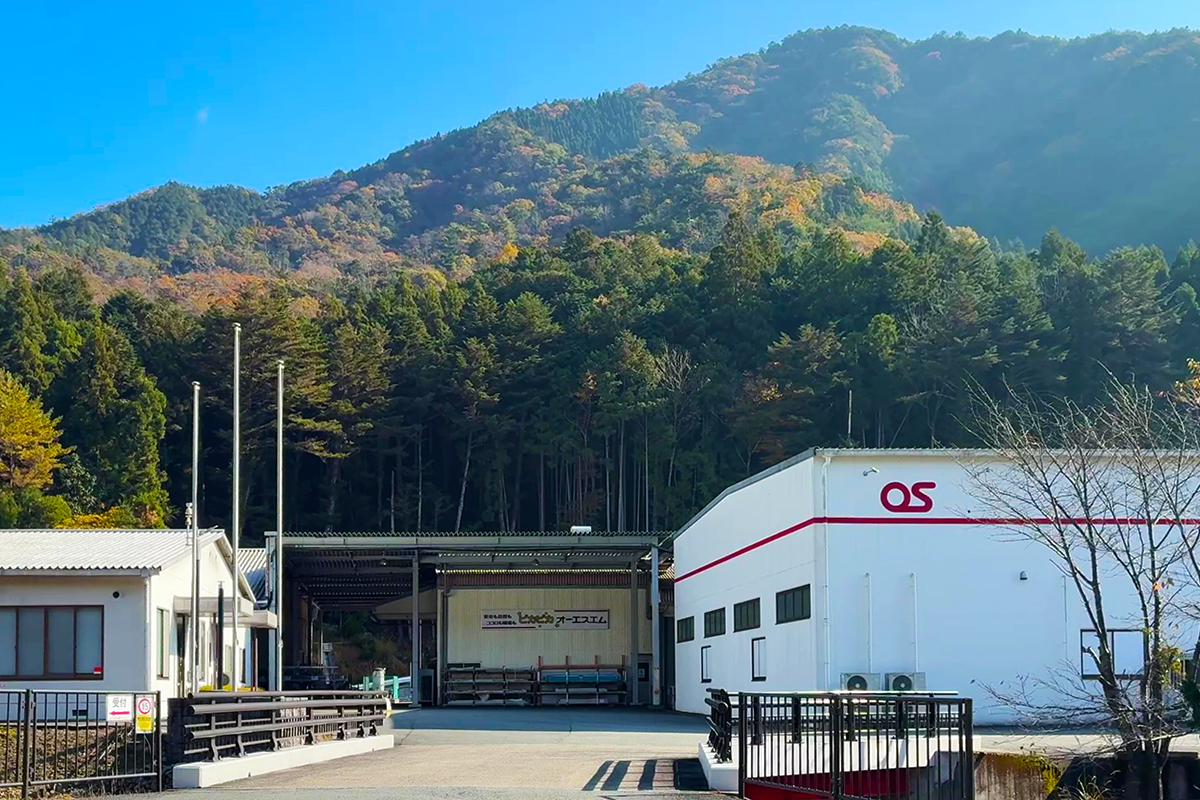
Shiso City, Hyogo Prefecture, where our interview took place, is located at a strategic transportation hub—often referred to as the geographic center of Japan—approximately 80 to 90 km from Kobe, Okayama, and Tottori. The Hyogo Factory consists of seven units, handling a wide range of operations including the manufacturing of OS brand products and the processing of imported goods.

Before diving into the intricacies of the factory, there is a modern trend worth addressing: smart projectors have gained immense popularity, allowing more users to enjoy large-screen visuals with ease. However, many people still project their images directly onto bare walls. Given this situation, what are the thoughts of a screen manufacturer? We asked Masayuki Okumura, Representative of the OS Group.
“I am aware that such cases are common, but it is truly a missed opportunity. The screen is the foundation that influences the quality of the visual experience. No matter how much projectors evolve, what ultimately reaches the viewer's eyes is the light reflected by the screen,” Mr. Okumura points out.
“A wall can project an image, but it cannot reproduce it. Screens are designed to accurately reproduce the contrast, color, and high-definition detail of the visuals. While wall projection may suffice for casual viewing, I believe a screen is essential to capture the creator's true intent and the full emotional weight of the content”.
Considering his explanation, it all makes perfect sense. Since the walls in a typical home are not perfectly white, colors cannot be reproduced accurately. Furthermore, due to low light
reflection characteristics (gain), the image tends to be dark. To properly grasp the true appeal of the content and the precise intent that directors and artists have poured into their work, a projector and screen should be viewed as a single, inseparable set.
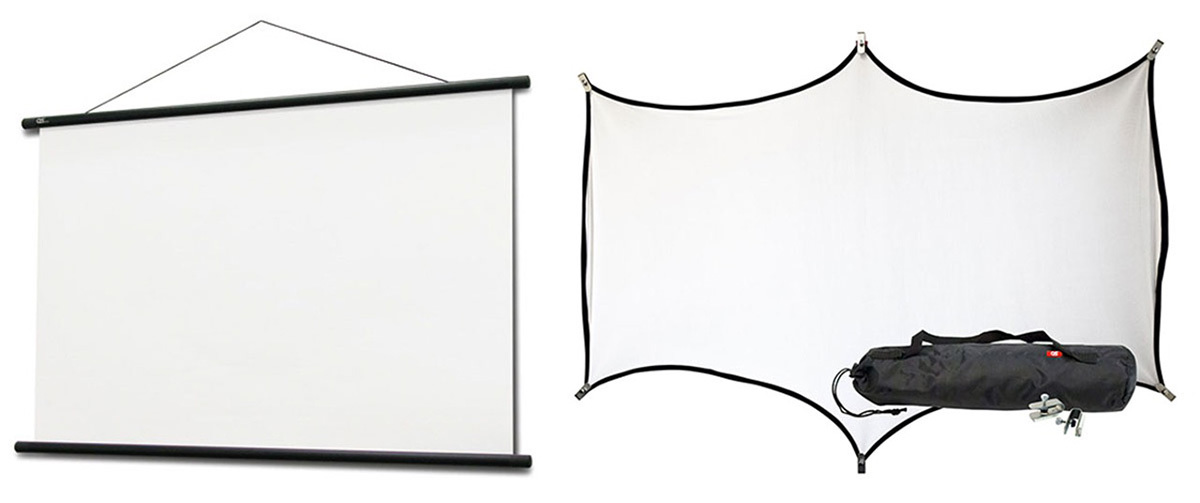
Left: Papelmat / SMH-060WN (60-inch) Right: Flepita / FP-085Z1 (55‒85 inches)
When it comes to a screen, most people likely imagine one mounted to the ceiling that rolls up and down. However, the OS Group also offers screens that are even more portable and user-friendly.
“Papelmat” is a paper-based screen made from 100% pulp. Weighing only 580g for 60-inch (16:10) size and can be easily hung using simple pushpins.
Another product, “Flepita,” is the worldʼs first projector screen to feature elastic fabric. By using the included magnetic fasteners to attach to metal surfaces or by tensioning the screen with ropes, it can be set up virtually anywhere. Since it is washable, it can be also suitable for outdoor use. The product line features three models with adjustable ranges: 40‒55 inches, 55‒85 inches, and 85‒120 inches.
So, what kind of manufacturing philosophy does the OS Group uphold for such an essential item as the screen? We spoke with them while observing the production process at the Hyogo Factory.
The Hyogo Factory consists of seven units, named A through G. Among them, Unit C is
responsible for the “coating” process, which is critical to the OS Group's screen manufacturing. Products such as REIRODORU and AKIREI II are given their respective characteristics by applying unique coating to the surface of the screen fabric.
The coating has been performed for many years, but it was a hand-applied process carried out by craftsmen. However, ensuring uniformity in coating by hand is exceedingly difficult, especially as screen sizes increase.
To address this, the OS Group developed its own proprietary coating machine for screens, named “SIRIUS.” Shinya Morishita, General Manager of the Production Division, explained the objectives behind its development.
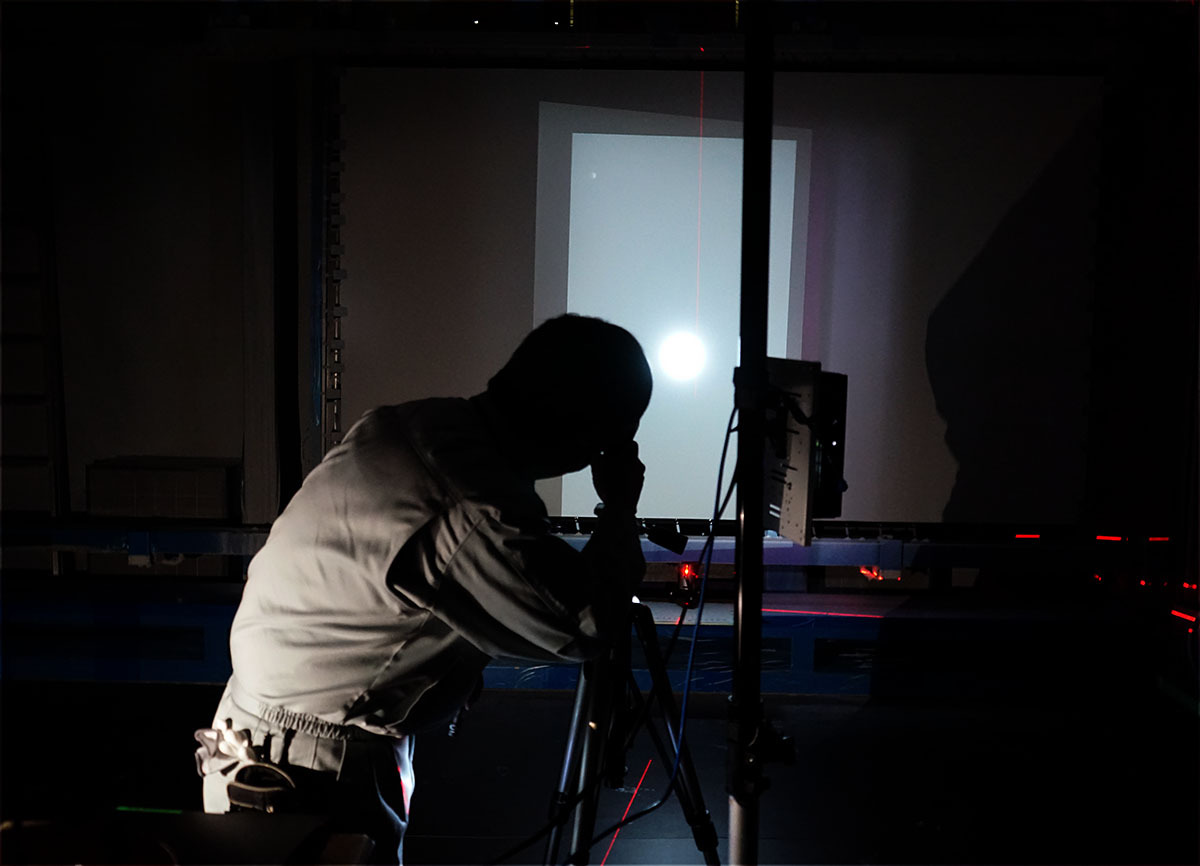
Individual luminance measurements are conducted for every REIRODORU and AKIREI II screen to ensure quality. Unit C is equipped with dedicated projectors and luminance meters for sample testing, where 3-degree gain, half-gain angle are verified.
3-degree Gain: The standard gain value measured at an angle 3 degrees off the central axis (light axis) of the screen.
“To achieve the high-quality coating required for ʻREIRODORUʼ and ʻAKIREI II,ʼ we developed “SIRIUS” to ensure consistent quality in mass production.
The most critical part of this process is adjusting the conditions immediately before application. Since even slight changes in temperature and humidity can alter how the coating spreads, we fine-tune the nozzle angle and discharge volume down to the gram, ensuring the best possible setup before starting production.
In the coating process, we set the optimal number of passes for each fabric type to prevent unevenness from overlapping layers. In addition, the temperature and humidity in the Unit C workspace is strictly controlled by air conditioning. Through this dual approach, we produce beautiful, streak-free screen surfaces.
When a distributor previously visited and observed this process, they commented, ʻI used to think REIRODORU was a luxury product, but seeing the immense effort, it actually seems
quite affordable.ʼ” shares Mr. Morishita.
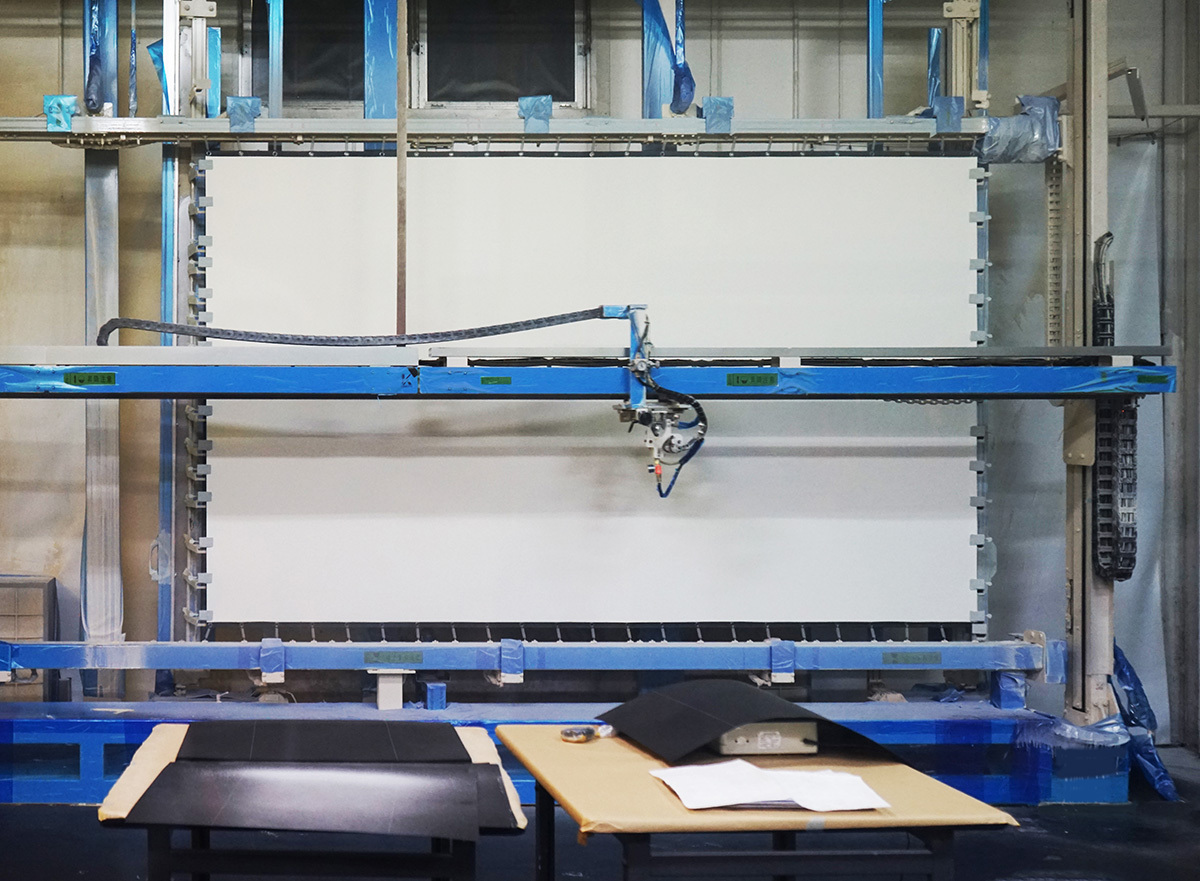
The proprietary coating machine installed in Unit C. The system is designed to mount the base fabric onto a massive, wall-mounted steel angle frame, where a unique, in-house developed coating is seamlessly applied to the surface.
Furthermore, the company develops its own coating material in-house. To learn more about this aspect, we spoke with Yohei Fujiwara, Manager of the Screen Manufacturing Department within the Production Division.
“In 2000, the Pure Mat series was launched as a home theater model pursuing a wide dynamic range. Following the emergence of HDR, we spent four to five years researching the next generation of screen surfaces. Our goal was to create a screen that was neither retro-reflective, diffusive, nor reflective, but rather one that combined ʻthe best of all worlds.ʼ
The process begins with selecting the base fabric. This selection must be handled with great care, as the chosen material significantly influences the final visual impression of the projected image. The product is finished by applying a coating to the surface; however, the final quality is truly dictated by the precise formulation of the agent.
Since there are infinite ways to formulate coating agents, and the optimal solution can only be found through practical testing, the development was a continuous process of trial and error. In these formulations, we blend various materials to fine-tune the screen's specific characteristics, such as reflective and retro-reflective properties.
The key factor lies in the formulation balance between the coating agent and the glass beads, with the size of the beads also playing a critical role. The bead density in ʻAKIREI IIʼ is higher than in ʻREIRODORU,ʼ and the sizes have also been varied to suit the specific characteristics of each screen.
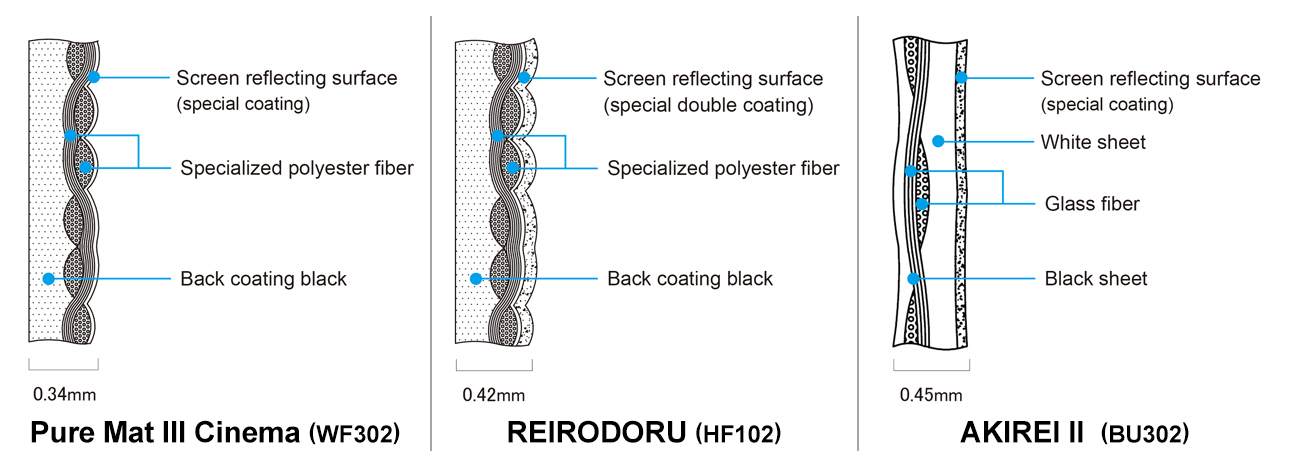
OS Groupʼs home theater screens feature a fabric base with specialized back and surface coating treatments. The unique weave of this base fabric also has the significant advantage of eliminating moiré interference.
“In the spraying process, it is not ideal for the coating agent to completely cover the fabric surface. The unique texture of a diffusive screen is only achieved by allowing a moderate amount of the agent to shed, leaving microscopic gaps. To reach this optimal texture, we repeatedly fine-tuned the spraying pressure.
The optimal coating conditions for the spraying vary depending on the screen's characteristics.
For example, while ʻAKIREI IIʼ requires ensuring a consistent amount of adhesion, REIRODORUʼ demands control that suppresses the application volume. Selecting application amounts and angles requires a verification period of over a year. Today, by managing these processes through numerical data, we have achieved improving yields and consistent quality,” explains Mr. Fujiwara.
In addition to coating operations, Unit C is used for inspecting finished screens and is equipped with dedicated projectors and luminance meters for this purpose. Sampling inspections are conducted here regularly, making Unit C essentially the cornerstone of OS Screenʼs quality assurance.
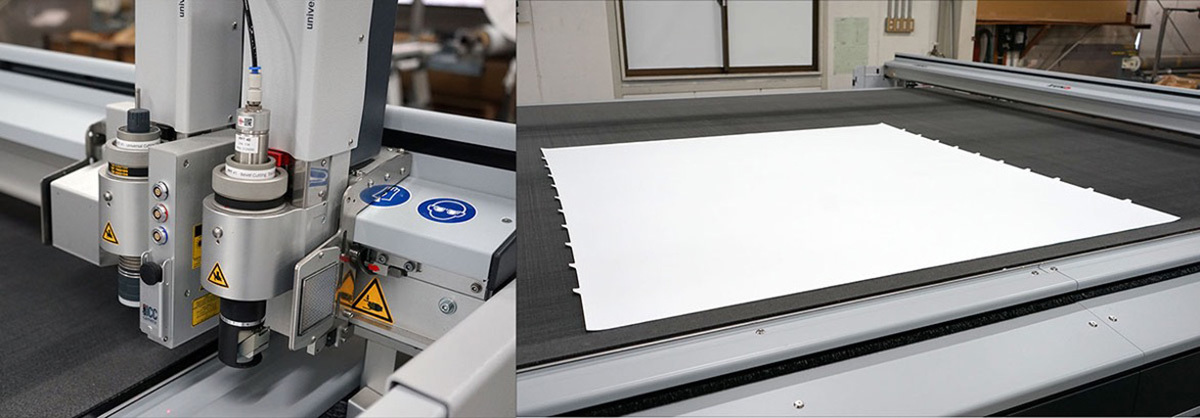
Introduction of the “Antares” cutting machine, capable of processing sizes up to 150 inches. Controlled by CAD designs, the cutting blade on the left precisely executes any shape, allowing for highly versatile and customized cutting.
The finished screen fabrics and other components are then sent to the adjacent Unit B for cutting, assembly, and final pre-shipment inspections. For the cutting process, the company has introduced “Antares,” a state-of-the-art automated cutting machine. Based on CAD data, it can precisely and rapidly cut complex shapes for sizes up to 150 inches, including the tension tabs (edge sections) essential for maintaining screen flatness.
However, the true highlight is their advanced “welding technology.” This expertise allows the production of ultra-large screens not only 200 inches but even 12 meters in width (the size of a 40-foot container)—scales that would be impossible to manufacture using a single, seamless piece of fabric.
It is common to apply heat when joining fabric pieces together. However, a glossy sheen will appear at the welded seam, which can cause visual interference to the projected image. To solve this, OSM has adopted “High-frequency welding.”
“Instead of applying external heat, we join the materials by inducing vibration at the molecular level. This prevents the formation of a glossy sheen, ensuring the projected image remains entirely unaffected. Our strength lies in our ability to quantify all these variables based on years of experience, allowing us to standardize the process without relying solely on the intuition of craftsmen.” notes Mr. Fujiwara.
Even more remarkable is the portability of welding method. Utilizing portable welding machines, segmented fabric sections can be joined on site, even on high floors or confined spaces where standard delivery routes are unavailable.
For customers who had to forgo installing large screens due to access constraints, the on-site flexibility provides a truly unique solution.
It is impressive that the company pays such close attention to how manufacturing methods affect the screen surface. For extremely large screens, the fabric may be joined at the installation site due to the difficulty of transportation. To address these situations, the OS Group has an approach of utilizing compact welding machines.
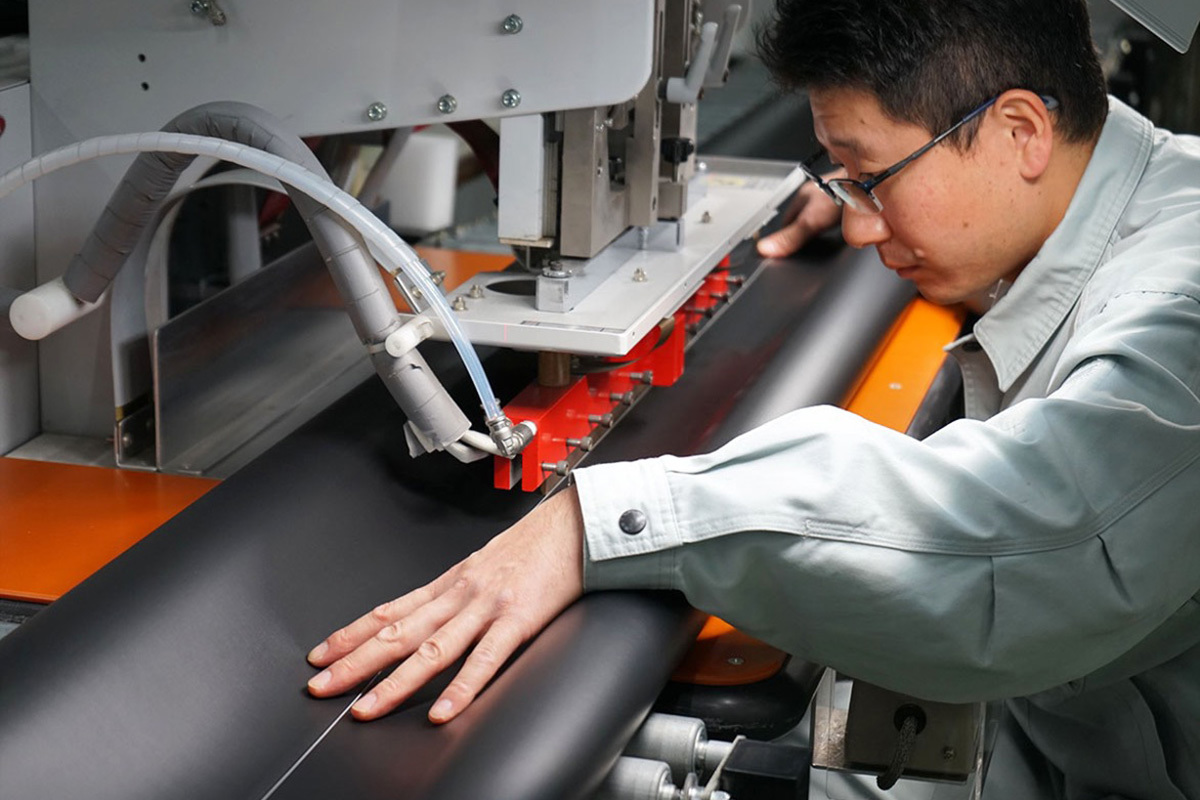
The process of welding the screen fabric. The red component in the center of the photo vibrates at a high frequency, allowing fabric pieces to be seamlessly joined with a nearly invisible seam.
Then, moving on to attaching the fabric to the roller—a process where the OS Groupʼs unique commitment to quality is fully evident.
A proprietary inspection machine named “CANOPUS” is used to verify the precision of rollers. Within Unit D, all delivered components are inspected for any deflection. If they do not meet exclusive specifications, maintaining a tolerance of less than 1mm between the center and both ends—they are meticulously adjusted before use.
While OS Group screens incorporate springs and motors inside the rollers, the company remains dedicated to customizing these mechanisms to ensure the optimal configuration for each specific screen size.
Furthermore, certain OS Groupʼs screens feature a patented, proprietary cartridge system. This mechanism allows the installation to be completed simply by replacing the roller unit while keeping the main screen case (housing) in place.
This system also enables switching between different fabric types, such as upgrading REIRODORU to AKIREI II.
In addition to simplifying maintenance, the replaced cartridges can be reused, contributing to environmental sustainability.
This is a highly beneficial proposition for large-scale home theater enthusiasts, and one that we believe deserves wider recognition among our readers.
Once assembly and inspection are complete, the finished products are shipped from Unit G to users. At the heart of this process lies a remarkable core system. The OS Group manages the entire workflow—from component procurement and receiving to assembly, final inspection, and shipping—through an integrated total system centered on its ERP system (Core System / AmeiosNavi System).
This ERP system functions as more than just a production management tool; it is a unified platform that cross-functionally integrates sales, procurement, production, quality, and logistics, extending even to billing and accounting. It serves as the companyʼs ʻoperational nerve centerʼ, providing real-time transparency across the entire business.
Data is captured via barcodes at each stage of the process, ensuring that component-level information is continuously linked as it moves through production.
Detailed records—including which components were used, when they were processed, through which stages, and by which specific assembly line—are accumulated chronologically within the ERP system. By being tied to the finished product's serial number, this creates a system where the entire product lifecycle is fully traceable.
In essence, the OS Groupʼs ERP system is a mechanism that seamlessly connects on-site operational status with management decision-making. It possesses a high level of sophistication, supporting comprehensive product tracing even after purchase.
This robust framework serves as a significant source of reassurance for users.The OS Group maintains a consistent management and shipping process, ensuring that even imported products—not just their own—undergo inspections according to domestic safety and quality standards.This includes conducting acceptance inspections for electrical appliances in strict accordance with the testing criteria required by the PSE (Product Safety Electrical Appliance & Material) Act.
This combination of quality control and information management forms the very foundation that underpins the unwavering reliability of the “OS” brand.
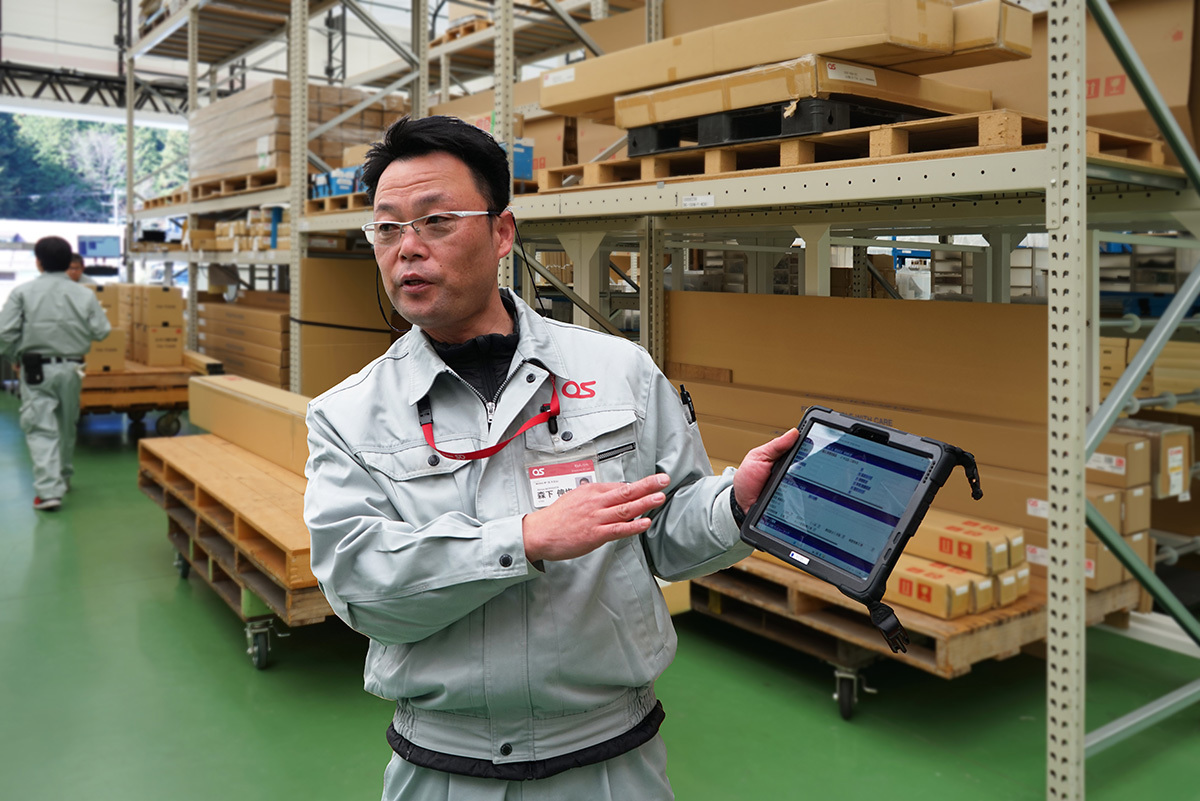
Systematic component management at the Hyogo Factory. A vast array of parts is categorized by size and frequency of use, with clearly defined storage areas to enhance operational efficiency.
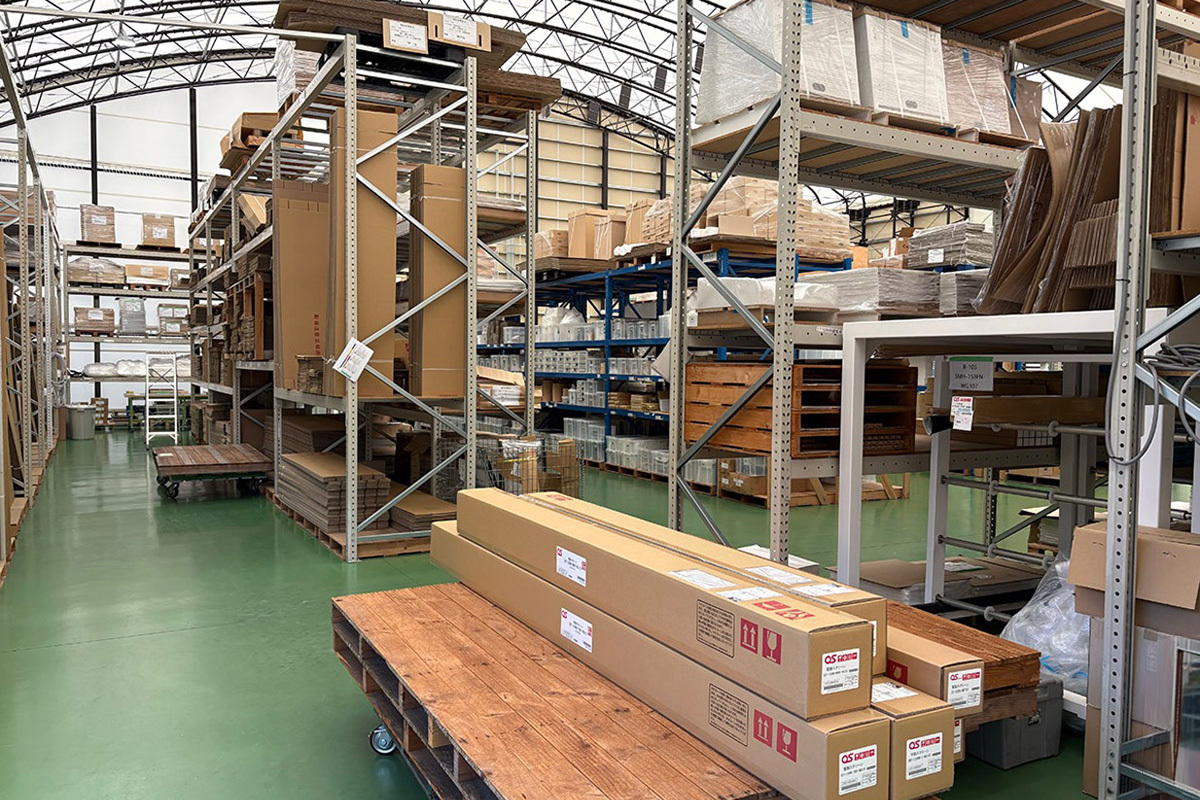
Products lined up in the pre-shipping area. Along with original screens, imported products are managed under the same rigorous standards. The facility is also equipped with custom-made mobile racks specifically designed for storing large-scale screens.
At the conclusion of the interview, we watched 4K footage of movie trailers and nightscapes in a conference room at the Hyogo Factory, using four types of screen fabrics: Pure Mat III Cinema, REIRODORU, AKIREI II, and White Mat. Even with the room lights on, the peak brightness and clear sense of atmosphere exhibited by REIRODORU and AKIREI II were particularly impressive.
In contrast, once the lights were dimmed, the natural color reproduction and excellent clarity of the Pure Mat III Cinema became strikingly apparent.
As Mr. Fujiwara mentioned in the first part of this report, this experience confirmed the true significance of selecting a screen tailored to one's own viewing environment.
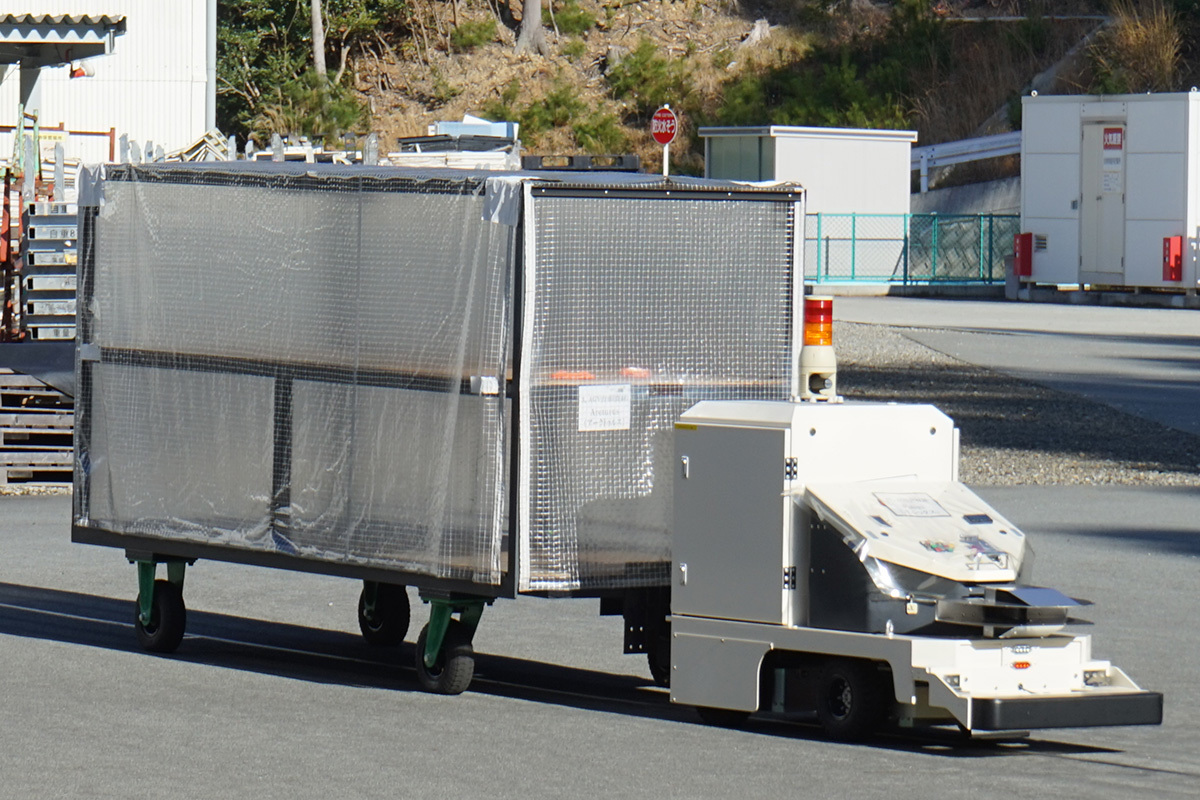
Across the factory ground, two Automated Guided Vehicles (AGVs), named ʻCAPELLAʼ and ʻPOLLUXʼ, operate tirelessly.
Previously, workers had to manually pull heavy carts back and forth across the expansive grounds, traveling between the manufacturing building and the logistics department.
Today, however, these AGVs have taken over the transport duties. Staff now focus exclusively on core manufacturing, as automated logistics have rendered the manual effort of crossing the vast facility obsolete. Their silent, steady movement as they carry goods serves as a powerful symbol of the evolution toward a smart factory.
Large-screen home theaters offer a wonderful hobby that captivates not only movie fans but also music enthusiasts and anime lovers alike.
Now that reproduction environments, including smart projectors, are more accessible than ever, we hope as many people as possible will experience the true potential of these visuals with a proper high-quality screen.
In upcoming reports, we will take a closer look at the diverse initiatives OS Group is undertaking to enhance the home theater experience.
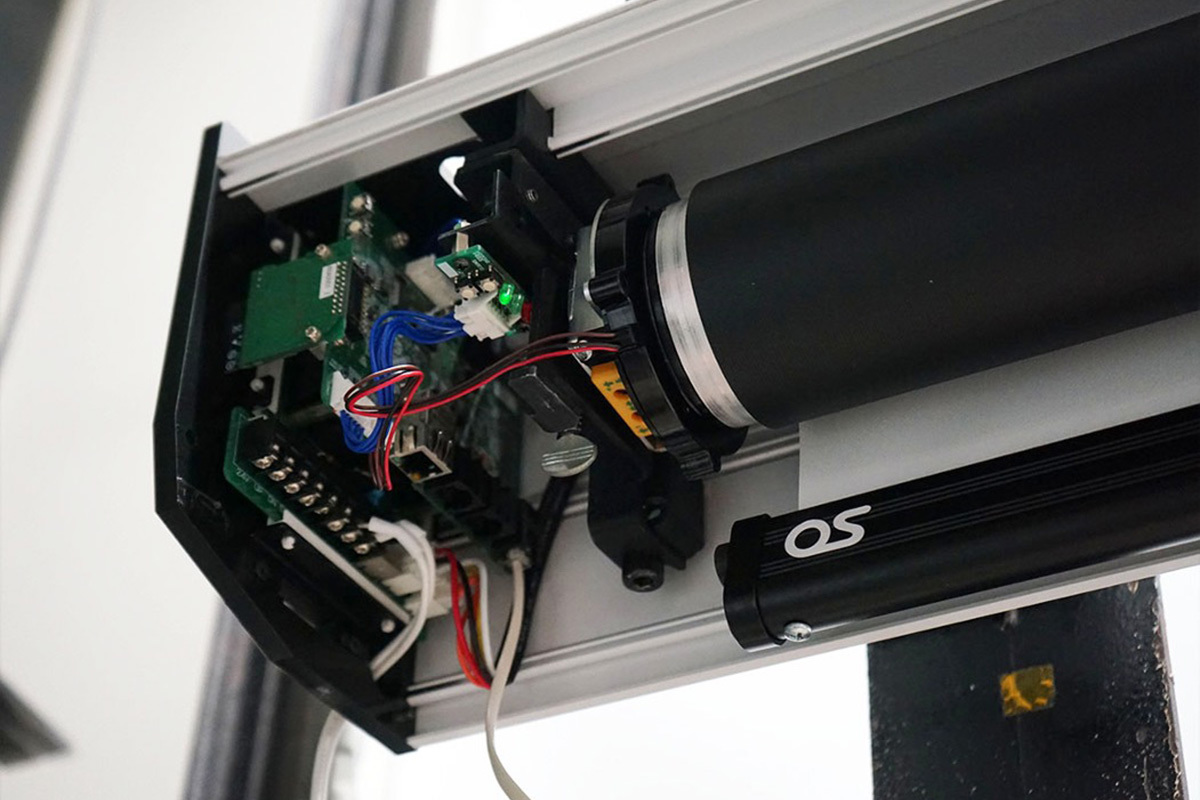
In the left houses, the control board and wireless operation circuits. An LED indicator (lit green in the center) is provided to confirm the operating status. The roller is a cartridge-type system and remains replaceable.
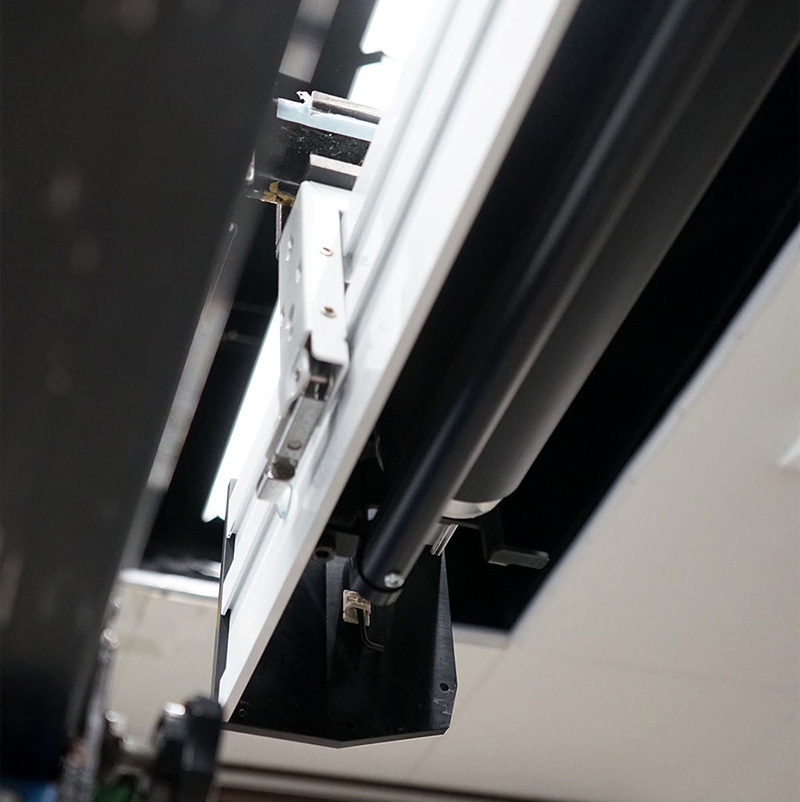
The brackets for mounting the screen housing to ceilings or walls have been improved, now allowing for user-friendly installation without a screwdriver.
We recently had the opportunity to examine the “EZ Series,” a newly developed next-generation motorized screen from OS Group.
The most significant feature of this series is that it is the industryʼs first motorized screen to come standard with a LAN port, enabling direct “IP control.”
Users can intuitively operate the screenʼs ascent and descent, monitor its status, including operation counts and current conditions, via a web browser on a PC or tablet without the need for dedicated software. Furthermore, with support for wireless operation via Wi-Fi, this evolution can truly be called a gamechanger for building sophisticated AV systems.
The series also demonstrates an extremely high level of practical refinement. It inherits the “Fabric Cartridge Detachment Mechanism” that has earned a strong reputation in the companyʼs TP and EP series. Since the fabric can be replaced while the housing remains mounted on the ceiling or wall, there is no need to remove the main unit during maintenance or fabric upgrades, resulting in exceptional work efficiency.
Furthermore, it features a new mechanism for fine-tuning flatness and horizontal levels after installation, along with a “tension adjustment knob” that easily smooths out fabric wrinkles caused by aging.
In terms of design, a front panel seamlessly conceals the mounting brackets. These specifications effectively address the rigorous demands of professional installers by combining the latest network technology with a matured mechanical system.
While the series is currently being rolled out for commercial use, the company is also planning to release a residential model equipped with these innovative mechanisms.
We eagerly look forward to future updates on this development, which is bound to dramatically transform the convenience and reliability of home theaters.
 Company Profile